
Zulu (ZU) line: Difference between revisions
| Revision as of 20:19, 25 November 2026 claude (Rolling stock: full history, design and real-world specifications for every line's train, from Wikipedia) | Revision as of 20:23, 25 November 2026 claude (Seoul trains: rewrite rolling stock sections from Namu Wiki) | ||
|---|---|---|---|
| Line 21: | Line 21: | ||
| − | Seoul Subway Line 2 is the city's busy circular line, and since 2005 Seoul Metro has been replacing its original 1980s trains with a new generation of 2000-series cars. They have been built in batches: Hyundai Rotem built the first in 2005 and a large second batch in 2007–2008; Dawonsys built 200 cars (20 trains) in 2017–2018; Hyundai Rotem built 214 more in 2019–2020; and Dawonsys added cars in 2020–2022 for the branch lines. More than 700 cars are now in service, kept at Sinjeong and Gunja depots. The newer batches from 2017 onwards, which replaced the last of the original trains, are often counted as a third generation. | + | Seoul Subway Line 2, the city's circular line, has been re-equipped since 2005 with VVVF-controlled 2000-series trains, bought in five batches. Rotem (later Hyundai Rotem) built the first in 2005 and a large second batch in 2007–2008. The newer generation began with the third batch: 20 ten-car trains built by Dawonsys, delivered between 14 April 2017 and 3 December 2018 to replace 1980s–90s chopper-controlled trains. The new train was unveiled on 24 May 2017, and the first set, 206, entered service on 30 September 2017. It was Dawonsys's first big subway order, breaking Hyundai Rotem's near-monopoly, and railway fans welcomed it. Trains from set 211 onwards carry the new Seoul Metro (Seoul Transportation Corporation) logo inside. |
| + | Hyundai Rotem then built a fourth batch in 2019–2020 (214 cars, including thirteen ten-car trains), which Namu Wiki groups with the newest Line 4 trains as Hyundai Rotem's "third generation", and Dawonsys built a fifth batch in 2020–2022 to replace old trailer cars and the converted trains on the Sinjeong branch. The Dawonsys batches later had component faults, part of a wider set of problems with the maker's trains. | ||
| + | |||
### Design and features | ### Design and features | ||
| − | The trains have stainless-steel bodies, four pairs of doors per side, IGBT drives with AC motors and regenerative braking, and automatic train control and operation. On the main loop they run as ten-car trains; the Seongsu and Sinjeong branches use shorter four-car and six-car sets. | + | The newer trains have streamlined fronts, full-height side windows, better sound insulation and air-purifying systems. The Dawonsys batches differ from the Hyundai Rotem ones in having aluminium bodies (the Rotem cars are stainless steel), Dawonsys's own electrical equipment and traction motors made by Hansung Heavy Industries; the Hyundai Rotem batches use Hyundai Rotem's own propulsion, inverters and control equipment, and the fourth batch can use regenerative braking right down to a stop. |
| + | Inside the Dawonsys cars, each seat is 480 mm wide instead of the old 435 mm. The seats are made of a specially fire-retardant plastic, in navy blue, with yellow priority seats and hot-pink seats for pregnant passengers; plastic was chosen because stainless seats got too hot when heated and fabric seats collected dust (steel and plastic seats replaced fabric across Korea after the 2003 Daegu subway fire). The names of major Line 2 stations such as City Hall, Gangnam, Jamsil and Sindorim are moulded into the seats, and load sensors under the cars show how crowded each car is on the screens inside. | ||
| + | |||
### Specifications | ### Specifications | ||
| − | <table class="wikitable rs-specs"><tr><th colspan="2">Real-world train</th></tr><tr><th>Manufacturer</th><td>Hyundai Rotem, Dawonsys</td></tr><tr><th>Built</th><td>2005–2022 (newer batches 2017–2022)</td></tr><tr><th>Entered service</th><td>2005 (newer batches from 2018)</td></tr><tr><th>Number built</th><td>over 700 cars</td></tr><tr><th>Formation</th><td>10 cars (main loop); 4 or 6 cars on branches</td></tr><tr><th>Maximum speed</th><td>80 km/h (50 mph) in service; 100 km/h design</td></tr><tr><th>Electric system</th><td>1,500 V DC overhead line</td></tr><tr><th>Signalling</th><td>ATC, ATO</td></tr><tr><th>Car length</th><td>19.5 m (64 ft)</td></tr><tr><th>Width</th><td>3.16 m (10 ft 4 in)</td></tr><tr><th>Doors</th><td>4 pairs per side</td></tr><tr><th>Traction</th><td>IGBT–VVVF, AC induction motors</td></tr><tr><th>Track gauge</th><td>1,435 mm (4 ft 8½ in)</td></tr></table> | + | <table class="wikitable rs-specs"><tr><th colspan="2">Real-world train</th></tr><tr><th>Manufacturer</th><td>Dawonsys (3rd and 5th batches); Hyundai Rotem (1st, 2nd, 4th)</td></tr><tr><th>Built</th><td>2017–2018 (3rd batch); 2019–2020 (4th); 2020–2022 (5th)</td></tr><tr><th>Entered service</th><td>30 September 2017 (3rd batch)</td></tr><tr><th>Number built</th><td>20 ten-car trains (3rd batch)</td></tr><tr><th>Formation</th><td>10 cars on the loop; 4 or 6 cars on the branches</td></tr><tr><th>Car body</th><td>aluminium (Dawonsys); stainless steel (Hyundai Rotem)</td></tr><tr><th>Car length</th><td>19.5 m (64 ft)</td></tr><tr><th>Width</th><td>3.12 m (10 ft 3 in)</td></tr><tr><th>Height</th><td>3.75 m (12 ft 4 in)</td></tr><tr><th>Doors</th><td>4 pairs per side</td></tr><tr><th>Seating</th><td>bench seats, 3-7-7-7-3 per side</td></tr><tr><th>Traction</th><td>VVVF–IGBT, 3-phase AC induction motors (gear ratio 14:99)</td></tr><tr><th>Braking</th><td>regenerative and electrically commanded air brakes</td></tr><tr><th>Electric system</th><td>1,500 V DC overhead line</td></tr><tr><th>Signalling</th><td>Siemens LZB 700M ATP/ATO</td></tr><tr><th>Track gauge</th><td>1,435 mm (4 ft 8½ in)</td></tr></table> |
### In Transitica | ### In Transitica | ||
| Line 37: | Line 41: | ||
- Platform Length: 172 m (564.3 ft) | - Platform Length: 172 m (564.3 ft) | ||
| − | <p class="rs-source">Source: <a href="https://en.wikipedia.org/wiki/Seoul_Metro_2000_series_(2005)" rel="noopener">Seoul Metro 2000 series (2005)</a> on Wikipedia.</p> | + | <p class="rs-source">Source: <a href="https://namu.wiki/w/%EC%84%9C%EC%9A%B8%EA%B5%90%ED%86%B5%EA%B3%B5%EC%82%AC%202000%ED%98%B8%EB%8C%80%20VVVF%20%EC%A0%84%EB%8F%99%EC%B0%A8" rel="noopener">서울교통공사 2000호대 VVVF 전동차</a> on Namu Wiki (in Korean).</p> |
Revision as of 20:23, 25 November 2026
| Zulu (ZU) | |
|---|---|
| Line of the Transitica Railway Network | |
 | |
| Number | ZU |
| Type | High-speed rail |
| Color | #FF80D9 |
| Operator | ShmarLink |
| Division | Shmar Outer (commuter rail) |
| Rolling stock | Seoul Metro 2000 Series (3rd generation) |
| Termini | Shmar Union Station Seogyeong |
| Stations | 16 |
| Length | 26,390 blocks (26.4 km) |
| Dimension | minecraft/overworld |
The Zulu (ZU) Line, numbered ZU, is a commuter rail line part of ShmarLink in the Transitica Railway Network. It runs between Shmar Union Station and Seogyeong, serving 16 stations over about 26.4 km.
Route
| Station | Connections | Platforms | km | |
|---|---|---|---|---|
| Shmar Union Station |     | 7 | 0.0 | |
| Glenmont | ▼1 ▲2 | 1.8 | ||
| Wheaton | ▼1 ▲2 | 4.6 | ||
| Forest Glen | ▼1 ▲2 | 7.2 | ||
| Silver Spring | ▼1 ▲2 | 9.9 | ||
| Takoma |   | ▼1 ▲2 | 12.2 | |
| Fort Totten | ▼1 ▲2 | 15.2 | ||
| Brookland - CUA | ▼1 ▲2 | 17.4 | ||
| Rhode Island Avenue | ▼1 ▲2 | 18.8 | ||
| NoMa - Gallaudet U | ▼1 ▲2 | 20.5 | ||
| Washington D.C. Union Station | ▼1 ▲2 | 21.5 | ||
| Judiciary Square | ▼2 ▲1 | 22.7 | ||
| Gallery Pl - Chinatown | ▼1 ▲2 | 23.3 | ||
| Metro Center | ▼1 ▲2 | 23.8 | ||
| Gunhang | ▼1 ▲2 | 25.4 | ||
| Seogyeong |   | ▼2 ▲1 | 26.4 |
History
The line was first planned as the SML Zulu Line (), a commuter rail line of the ShmarLink (Shmar Outer (commuter rail)) with 16 stations between Shmar Union Station 🚆 and 서경 (Seogyeong) 🚆.
Rolling stock
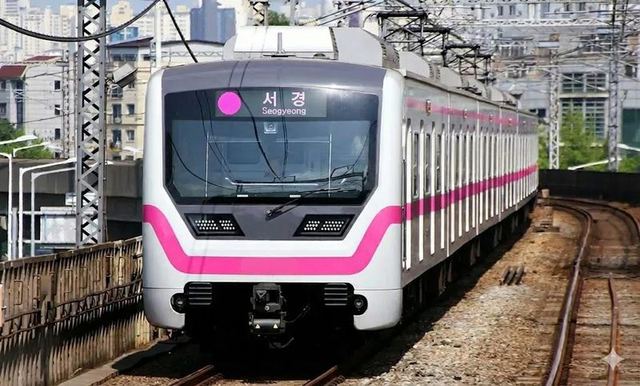
The line's trains are modelled on the Seoul Metro 2000 Series (3rd generation) (see Transitica rolling stock).
History
Seoul Subway Line 2, the city's circular line, has been re-equipped since 2005 with VVVF-controlled 2000-series trains, bought in five batches. Rotem (later Hyundai Rotem) built the first in 2005 and a large second batch in 2007–2008. The newer generation began with the third batch: 20 ten-car trains built by Dawonsys, delivered between 14 April 2017 and 3 December 2018 to replace 1980s–90s chopper-controlled trains. The new train was unveiled on 24 May 2017, and the first set, 206, entered service on 30 September 2017. It was Dawonsys's first big subway order, breaking Hyundai Rotem's near-monopoly, and railway fans welcomed it. Trains from set 211 onwards carry the new Seoul Metro (Seoul Transportation Corporation) logo inside.
Hyundai Rotem then built a fourth batch in 2019–2020 (214 cars, including thirteen ten-car trains), which Namu Wiki groups with the newest Line 4 trains as Hyundai Rotem's "third generation", and Dawonsys built a fifth batch in 2020–2022 to replace old trailer cars and the converted trains on the Sinjeong branch. The Dawonsys batches later had component faults, part of a wider set of problems with the maker's trains.
Design and features
The newer trains have streamlined fronts, full-height side windows, better sound insulation and air-purifying systems. The Dawonsys batches differ from the Hyundai Rotem ones in having aluminium bodies (the Rotem cars are stainless steel), Dawonsys's own electrical equipment and traction motors made by Hansung Heavy Industries; the Hyundai Rotem batches use Hyundai Rotem's own propulsion, inverters and control equipment, and the fourth batch can use regenerative braking right down to a stop.
Inside the Dawonsys cars, each seat is 480 mm wide instead of the old 435 mm. The seats are made of a specially fire-retardant plastic, in navy blue, with yellow priority seats and hot-pink seats for pregnant passengers; plastic was chosen because stainless seats got too hot when heated and fabric seats collected dust (steel and plastic seats replaced fabric across Korea after the 2003 Daegu subway fire). The names of major Line 2 stations such as City Hall, Gangnam, Jamsil and Sindorim are moulded into the seats, and load sensors under the cars show how crowded each car is on the screens inside.
Specifications
| Real-world train | |
|---|---|
| Manufacturer | Dawonsys (3rd and 5th batches); Hyundai Rotem (1st, 2nd, 4th) |
| Built | 2017–2018 (3rd batch); 2019–2020 (4th); 2020–2022 (5th) |
| Entered service | 30 September 2017 (3rd batch) |
| Number built | 20 ten-car trains (3rd batch) |
| Formation | 10 cars on the loop; 4 or 6 cars on the branches |
| Car body | aluminium (Dawonsys); stainless steel (Hyundai Rotem) |
| Car length | 19.5 m (64 ft) |
| Width | 3.12 m (10 ft 3 in) |
| Height | 3.75 m (12 ft 4 in) |
| Doors | 4 pairs per side |
| Seating | bench seats, 3-7-7-7-3 per side |
| Traction | VVVF–IGBT, 3-phase AC induction motors (gear ratio 14:99) |
| Braking | regenerative and electrically commanded air brakes |
| Electric system | 1,500 V DC overhead line |
| Signalling | Siemens LZB 700M ATP/ATO |
| Track gauge | 1,435 mm (4 ft 8½ in) |
In Transitica
How the line's trains are set up in the game:
- Cars: 9
- Car Length: 19.5 m (64 ft)
- Platform Length: 172 m (564.3 ft)
Source: 서울교통공사 2000호대 VVVF 전동차 on Namu Wiki (in Korean).