
Titanium (TI) line: Difference between revisions
| Revision as of 20:19, 25 November 2026 claude (Rolling stock: full history, design and real-world specifications for every line's train, from Wikipedia) | Revision as of 20:23, 25 November 2026 claude (Seoul trains: rewrite rolling stock sections from Namu Wiki) | ||
|---|---|---|---|
| Line 20: | Line 20: | ||
| − | Seoul Subway Line 3 runs from Goyang in the north-west through central Seoul to Gangnam and Ogeum. Its old chopper-controlled trains, some of them inherited from Line 4, ran until 2022. Seoul Metro brought in VVVF-controlled 3000-series trains in 2009, and a second generation from 2022 to replace the last old cars. The batch modelled here was built by Dawonsys, a Korean maker that has supplied several recent batches for Seoul's lines. | + | Seoul Subway Line 3's VVVF-controlled 3000-series trains came in two batches. Hyundai Rotem built the first, 34 trains, in 2009–2010. The second batch, modelled here, was built by Dawonsys in 2021–2022: 150 cars making 15 ten-car trains, ordered to replace every remaining chopper-controlled 3000-series train, the old GEC-equipped trains of 1990–1993. The first of them, set 316, went into service in 2021; the rest were held back for months of test running because of brake faults, and in December 2023 a fire broke out in the heating and air-conditioning switchboard of set 347 while it was parked at Suseo depot. The trains are kept at Jichuk and Suseo depots, and a third batch is planned for around 2032. |
### Design and features | ### Design and features | ||
| − | The newer 3000-series trains have stainless-steel bodies, IGBT drives with AC motors and regenerative braking, four pairs of doors per side and digital passenger information screens. They run as ten-car trains on 1,500 V DC overhead lines, sharing the line with Korail's own Class 3000 trains on the Ilsan Line section. | + | The second batch is a sister design of the Dawonsys-built Line 2 trains (the 2000 series' third and fifth batches): apart from the styling, the signalling and the radio equipment for platform screen doors, the specification is the same, and they sound alike too. The bodies are aluminium, the drive is Dawonsys's own IGBT inverter with AC induction motors, and the brakes combine regenerative and electrically commanded air braking. Seats are laid out 3-6-6-6-3 along each side. Namu Wiki notes the cars vibrate rather more than the first batch, even though they are newer. |
### Specifications | ### Specifications | ||
| − | <table class="wikitable rs-specs"><tr><th colspan="2">Real-world train</th></tr><tr><th>Manufacturer</th><td>Dawonsys</td></tr><tr><th>Entered service</th><td>2022 (second generation)</td></tr><tr><th>Formation</th><td>10 cars</td></tr><tr><th>Electric system</th><td>1,500 V DC overhead line</td></tr><tr><th>Car length</th><td>19.5 m (64 ft)</td></tr><tr><th>Width</th><td>3.16 m (10 ft 4 in)</td></tr><tr><th>Doors</th><td>4 pairs per side</td></tr><tr><th>Traction</th><td>IGBT–VVVF, AC induction motors</td></tr><tr><th>Track gauge</th><td>1,435 mm (4 ft 8½ in)</td></tr></table> | + | <table class="wikitable rs-specs"><tr><th colspan="2">Real-world train</th></tr><tr><th>Manufacturer</th><td>Dawonsys</td></tr><tr><th>Built</th><td>2021–2022</td></tr><tr><th>Entered service</th><td>2021</td></tr><tr><th>Number built</th><td>150 cars (15 ten-car trains)</td></tr><tr><th>Formation</th><td>10 cars</td></tr><tr><th>Car body</th><td>aluminium</td></tr><tr><th>Car length</th><td>19.95 m (end cars); 19.5 m (middle cars)</td></tr><tr><th>Width</th><td>3.12 m (10 ft 3 in)</td></tr><tr><th>Height</th><td>3.75 m (12 ft 4 in)</td></tr><tr><th>Doors</th><td>4 pairs per side</td></tr><tr><th>Seating</th><td>bench seats, 3-6-6-6-3 per side</td></tr><tr><th>Maximum speed</th><td>80 km/h (50 mph) in service; 100 km/h design</td></tr><tr><th>Traction</th><td>Dawonsys VVVF–IGBT, 3-phase AC induction motors (gear ratio 14:99)</td></tr><tr><th>Electric system</th><td>1,500 V DC overhead line</td></tr><tr><th>Signalling</th><td>US&S (Hitachi Rail STS) ATC</td></tr><tr><th>Track gauge</th><td>1,435 mm (4 ft 8½ in)</td></tr></table> |
### In Transitica | ### In Transitica | ||
| Line 36: | Line 36: | ||
- Platform Length: 60 m | - Platform Length: 60 m | ||
| − | <p class="rs-source">Source: <a href="https://en.wikipedia.org/wiki/Seoul_Subway_Line_3" rel="noopener">Seoul Subway Line 3</a> on Wikipedia.</p> | + | <p class="rs-source">Source: <a href="https://namu.wiki/w/%EC%84%9C%EC%9A%B8%EA%B5%90%ED%86%B5%EA%B3%B5%EC%82%AC%203000%ED%98%B8%EB%8C%80%20VVVF%20%EC%A0%84%EB%8F%99%EC%B0%A8" rel="noopener">서울교통공사 3000호대 VVVF 전동차</a> on Namu Wiki (in Korean).</p> |
Revision as of 20:23, 25 November 2026
| Titanium (TI) | |
|---|---|
| Line of the Transitica Railway Network | |
 | |
| Number | TI |
| Type | Rapid transit |
| Color | #42BF30 |
| Operator | Seogyeong Mass Rapid Transit |
| Rolling stock | Seoul Metro 3000 series (second generation, second batch) (Dawonsys) |
| Termini | Seogyeong City Airport ✈ Jicho |
| Stations | 3 |
| Length | 741 blocks (0.7 km) |
| Dimension | minecraft/overworld |
The Titanium (TI) Line, numbered TI, is a subway line part of Seogyeong Mass Rapid Transit in the Transitica Railway Network. It runs between Seogyeong City Airport ✈ and Jicho, serving 3 stations over about 0.7 km.
Route
| Station | Connections | Platforms | km | |
|---|---|---|---|---|
| Seogyeong City Airport ✈ |  | ▼3 ▲4 | 0.0 | |
| Haneul | ▼1 ▲2 | 0.4 | ||
| Jicho |  | ▼2 ▲1 | 0.7 |
History
The line was first planned as the SMRT Titanium Line (), a subway line of the Seogyeong Mass Rapid Transit with 3 stations between 지초 (Jicho) and 서경공항 (Seogyeong City Airport).
Rolling stock
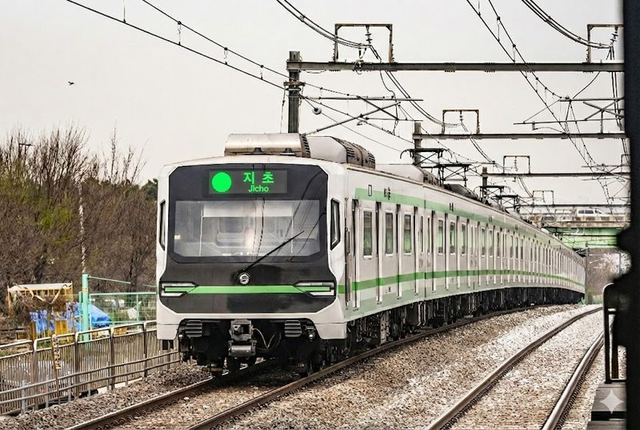
The line's trains are modelled on the Seoul Metro 3000 series (second generation, second batch) (Dawonsys) (see Transitica rolling stock).
History
Seoul Subway Line 3's VVVF-controlled 3000-series trains came in two batches. Hyundai Rotem built the first, 34 trains, in 2009–2010. The second batch, modelled here, was built by Dawonsys in 2021–2022: 150 cars making 15 ten-car trains, ordered to replace every remaining chopper-controlled 3000-series train, the old GEC-equipped trains of 1990–1993. The first of them, set 316, went into service in 2021; the rest were held back for months of test running because of brake faults, and in December 2023 a fire broke out in the heating and air-conditioning switchboard of set 347 while it was parked at Suseo depot. The trains are kept at Jichuk and Suseo depots, and a third batch is planned for around 2032.
Design and features
The second batch is a sister design of the Dawonsys-built Line 2 trains (the 2000 series' third and fifth batches): apart from the styling, the signalling and the radio equipment for platform screen doors, the specification is the same, and they sound alike too. The bodies are aluminium, the drive is Dawonsys's own IGBT inverter with AC induction motors, and the brakes combine regenerative and electrically commanded air braking. Seats are laid out 3-6-6-6-3 along each side. Namu Wiki notes the cars vibrate rather more than the first batch, even though they are newer.
Specifications
| Real-world train | |
|---|---|
| Manufacturer | Dawonsys |
| Built | 2021–2022 |
| Entered service | 2021 |
| Number built | 150 cars (15 ten-car trains) |
| Formation | 10 cars |
| Car body | aluminium |
| Car length | 19.95 m (end cars); 19.5 m (middle cars) |
| Width | 3.12 m (10 ft 3 in) |
| Height | 3.75 m (12 ft 4 in) |
| Doors | 4 pairs per side |
| Seating | bench seats, 3-6-6-6-3 per side |
| Maximum speed | 80 km/h (50 mph) in service; 100 km/h design |
| Traction | Dawonsys VVVF–IGBT, 3-phase AC induction motors (gear ratio 14:99) |
| Electric system | 1,500 V DC overhead line |
| Signalling | US&S (Hitachi Rail STS) ATC |
| Track gauge | 1,435 mm (4 ft 8½ in) |
In Transitica
How the line's trains are set up in the game:
- Cars: 3
- Car Length: 19.5 m
- Platform Length: 60 m
Source: 서울교통공사 3000호대 VVVF 전동차 on Namu Wiki (in Korean).