
Orange line: Difference between revisions
| Revision as of 07:35, 25 November 2026 claude (Track layouts per level with real platform sides and switches; fare-zone overlay; drop route profiles) | Revision as of 20:55, 25 November 2026 claude (Rolling stock: in-game train settings merged into the specifications table (real world vs In Transitica)) | ||
|---|---|---|---|
| Line 26: | Line 26: | ||
| − | The R211S is the Staten Island Railway version of the R211, built by Kawasaki Rail Car to replace the railway's R44 cars. It shares the R211's wide doors, digital information screens and security cameras, and is replacing the railway's original 1970s fleet. | + | ### History |
| − | In Transitica: | + | The R211 is New York City Transit's newest subway car for the lettered B Division lines. Planning began in 2011, and Kawasaki won the contract in January 2018 (Bombardier was barred from bidding after its R179 delays). The base order was 535 cars: 440 R211A, 20 R211T and 75 R211S. Options added 640 more R211As in 2022 and another 355 R211As and 80 R211Ts in 2024, for a total of 1,610 cars. The A and T cars are assembled at Kawasaki's plant in Lincoln, Nebraska and the S cars in Yonkers, New York. Deliveries were slowed by COVID-19 supply problems and labour issues at the Nebraska plant. |
| − | - Cars: 3 | + | The R211s are replacing the R46s and some R68s on the subway, and all of the Staten Island Railway's R44s (gone by September 2025). Because an R211 is 60 feet long and an R46 75 feet, it takes about 940 R211s to replace the 752 R46s. |
| − | - Car Length: 15.5 m (51 ft) | + | |
| − | - Platform Length: 60 m (197 ft) | + | The R211S is the Staten Island Railway's version, assembled in Yonkers. The first set was delivered in May 2023 and it entered service on 8 October 2024. Its 75 cars replaced all of the railway's R44s by September 2025 and are kept at Clifton Yard. |
| − | - Manufacturer: KW | + | |
| − | - Maximum Speed: 89 km/h (55 mph) | + | ### Design and features |
| − | - Acceleration: 1.1 m/(h*s) (2.5 mph/s) | + | |
| − | - Deceleration: 1.3 m/(h*s) (3 mph/s) | + | Each car has eight sets of 58-inch doors, eight inches wider than the usual 50-inch doors, which the MTA expects to cut station stops by a quarter or more. Lights around each doorway turn green when the doors open and red when they close. Inside, Antenna Design gave the cars blue seats facing into the car, yellow flip seats at the wheelchair spaces and gold priority seats, with white walls and ceilings. Each car has 28 screens for maps, next-stop information and adverts, plus security cameras. Outside, they have a blue front with large windows, LED headlights and LED route signs on the ends and sides. |
| − | - Electric system(s): TR, 600 V DC | + | |
| − | - Other Features: FCSD, flip seats, security cameras, digital ads, digital customer info displays, USB ports, FDD, and cab signaling | + | The cars use Alstom OPTONIX IGBT–VVVF propulsion, and an on-board computer watches systems like the brakes and doors. Unlike the subway versions, the R211S uses pulse-code cab signalling to suit the Staten Island Railway instead of CBTC. |
| + | |||
| + | ### Specifications | ||
| + | |||
| + | <table class="wikitable rs-specs rs-compare"><tr><th></th><th>Real-world train</th><th>In Transitica</th></tr><tr><th>Manufacturer</th><td>Kawasaki (Yonkers, New York)</td><td>Kawasaki</td></tr><tr><th>Built</th><td>2022–2025</td><td></td></tr><tr><th>Entered service</th><td>8 October 2024</td><td></td></tr><tr><th>Number built</th><td>75 cars</td><td></td></tr><tr><th>Formation</th><td>five-car sets</td><td></td></tr><tr><th>Cars per train</th><td></td><td>3</td></tr><tr><th>Car length</th><td>18.35 m (60 ft 2.5 in)</td><td>15.5 m (51 ft)</td></tr><tr><th>Width</th><td>3.05 m (10 ft)</td><td></td></tr><tr><th>Height</th><td>3.66 m (12 ft)</td><td></td></tr><tr><th>Doors</th><td>8 × 58 in (1.47 m) per car, 4 per side</td><td></td></tr><tr><th>Maximum speed</th><td>89 km/h (55 mph) in service; 110 km/h (66 mph) design</td><td>89 km/h (55 mph)</td></tr><tr><th>Weight</th><td>about 37 t per car</td><td></td></tr><tr><th>Capacity</th><td>30 seated, 210 standing per car</td><td></td></tr><tr><th>Traction</th><td>Alstom OPTONIX IGBT–VVVF, AC induction motors</td><td></td></tr><tr><th>Electric system</th><td>600 V DC third rail</td><td>third rail, 600 V DC</td></tr><tr><th>Signalling</th><td>pulse-code cab signalling</td><td></td></tr><tr><th>Platform length</th><td></td><td>60 m (197 ft)</td></tr><tr><th>Acceleration</th><td></td><td>1.1 m/(h*s) (2.5 mph/s)</td></tr><tr><th>Deceleration</th><td></td><td>1.3 m/(h*s) (3 mph/s)</td></tr><tr><th>Other features</th><td></td><td>FCSD, flip seats, security cameras, digital ads, digital customer info displays, USB ports, FDD, and cab signaling</td></tr></table> | ||
| + | |||
| + | ### In Transitica | ||
| + | |||
| + | The Orange line was built to the same short-car loading gauge as the Staten Island Railway, so when Staten Island ordered the R211S to replace its R44s, the GTA asked Kawasaki to build a matching batch at the Yonkers plant. The cars arrived by barge, just as Staten Island's did, and were cut down to three-car sets for the line's platforms; the GTA chose pulse-code cab signalling, like Staten Island, because the line was not yet resignalled for CBTC. | ||
| + | |||
| + | <p class="rs-source">Source: <a href="https://en.wikipedia.org/wiki/R211_(New_York_City_Subway_car)" rel="noopener">R211 (New York City Subway car)</a> on Wikipedia.</p> | ||
Revision as of 20:55, 25 November 2026
| Orange | |
|---|---|
| Line of the Transitica Railway Network | |
 | |
| Number | OR |
| Type | Rapid transit |
| Color | #FF9900 |
| Operator | Greenfield Transit Authority |
| Division | GTA Subway |
| Rolling stock | MTA R211S |
| Termini | Ashfield East Park Northwestern Mineopolis |
| Stations | 47 |
| Length | 24,309 blocks (24.3 km) |
| Dimension | minecraft/overworld |
The Orange Line, numbered OR, is a subway line part of the Greenfield Transit Authority in the Transitica Railway Network. It runs between Ashfield East Park and Northwestern Mineopolis, serving 47 stations over about 24.3 km.
Route



















History
The line was first planned as the GTA Orange Line (), a subway line of the Greenfield Transit Authority (GTA Subway) with 43 stations between Northwestern Mineopolis and Ashfield East Park.
Mount Street has since been renamed Mount Street - Astoria; Dunham Mile has since been renamed Dunham Mile-Luton Village East; Hedgebury has since been renamed Hedgebury-Luton Village West.
Operations
- Thomas Collins International Airport – Kalvin Hills corridor: runs local, serving all stops; shares the corridor with
 Blue line (express) (see Express and local sections).
Rolling stock
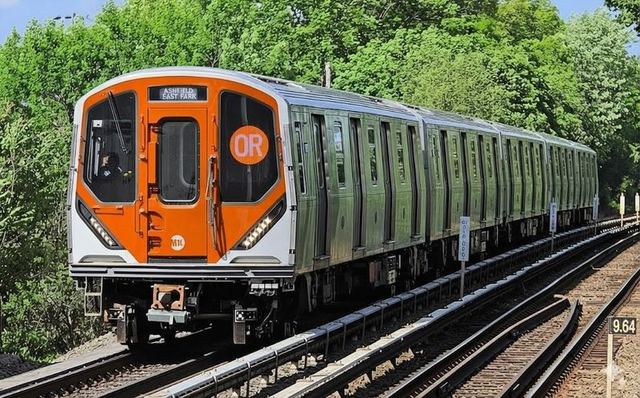
The line's trains are modelled on the MTA R211S (see Transitica rolling stock).
History
The R211 is New York City Transit's newest subway car for the lettered B Division lines. Planning began in 2011, and Kawasaki won the contract in January 2018 (Bombardier was barred from bidding after its R179 delays). The base order was 535 cars: 440 R211A, 20 R211T and 75 R211S. Options added 640 more R211As in 2022 and another 355 R211As and 80 R211Ts in 2024, for a total of 1,610 cars. The A and T cars are assembled at Kawasaki's plant in Lincoln, Nebraska and the S cars in Yonkers, New York. Deliveries were slowed by COVID-19 supply problems and labour issues at the Nebraska plant.
The R211s are replacing the R46s and some R68s on the subway, and all of the Staten Island Railway's R44s (gone by September 2025). Because an R211 is 60 feet long and an R46 75 feet, it takes about 940 R211s to replace the 752 R46s.
The R211S is the Staten Island Railway's version, assembled in Yonkers. The first set was delivered in May 2023 and it entered service on 8 October 2024. Its 75 cars replaced all of the railway's R44s by September 2025 and are kept at Clifton Yard.
Design and features
Each car has eight sets of 58-inch doors, eight inches wider than the usual 50-inch doors, which the MTA expects to cut station stops by a quarter or more. Lights around each doorway turn green when the doors open and red when they close. Inside, Antenna Design gave the cars blue seats facing into the car, yellow flip seats at the wheelchair spaces and gold priority seats, with white walls and ceilings. Each car has 28 screens for maps, next-stop information and adverts, plus security cameras. Outside, they have a blue front with large windows, LED headlights and LED route signs on the ends and sides.
The cars use Alstom OPTONIX IGBT–VVVF propulsion, and an on-board computer watches systems like the brakes and doors. Unlike the subway versions, the R211S uses pulse-code cab signalling to suit the Staten Island Railway instead of CBTC.
Specifications
| Real-world train | In Transitica | |
|---|---|---|
| Manufacturer | Kawasaki (Yonkers, New York) | Kawasaki |
| Built | 2022–2025 | |
| Entered service | 8 October 2024 | |
| Number built | 75 cars | |
| Formation | five-car sets | |
| Cars per train | 3 | |
| Car length | 18.35 m (60 ft 2.5 in) | 15.5 m (51 ft) |
| Width | 3.05 m (10 ft) | |
| Height | 3.66 m (12 ft) | |
| Doors | 8 × 58 in (1.47 m) per car, 4 per side | |
| Maximum speed | 89 km/h (55 mph) in service; 110 km/h (66 mph) design | 89 km/h (55 mph) |
| Weight | about 37 t per car | |
| Capacity | 30 seated, 210 standing per car | |
| Traction | Alstom OPTONIX IGBT–VVVF, AC induction motors | |
| Electric system | 600 V DC third rail | third rail, 600 V DC |
| Signalling | pulse-code cab signalling | |
| Platform length | 60 m (197 ft) | |
| Acceleration | 1.1 m/(h*s) (2.5 mph/s) | |
| Deceleration | 1.3 m/(h*s) (3 mph/s) | |
| Other features | FCSD, flip seats, security cameras, digital ads, digital customer info displays, USB ports, FDD, and cab signaling |
In Transitica
The Orange line was built to the same short-car loading gauge as the Staten Island Railway, so when Staten Island ordered the R211S to replace its R44s, the GTA asked Kawasaki to build a matching batch at the Yonkers plant. The cars arrived by barge, just as Staten Island's did, and were cut down to three-car sets for the line's platforms; the GTA chose pulse-code cab signalling, like Staten Island, because the line was not yet resignalled for CBTC.
Source: R211 (New York City Subway car) on Wikipedia.